


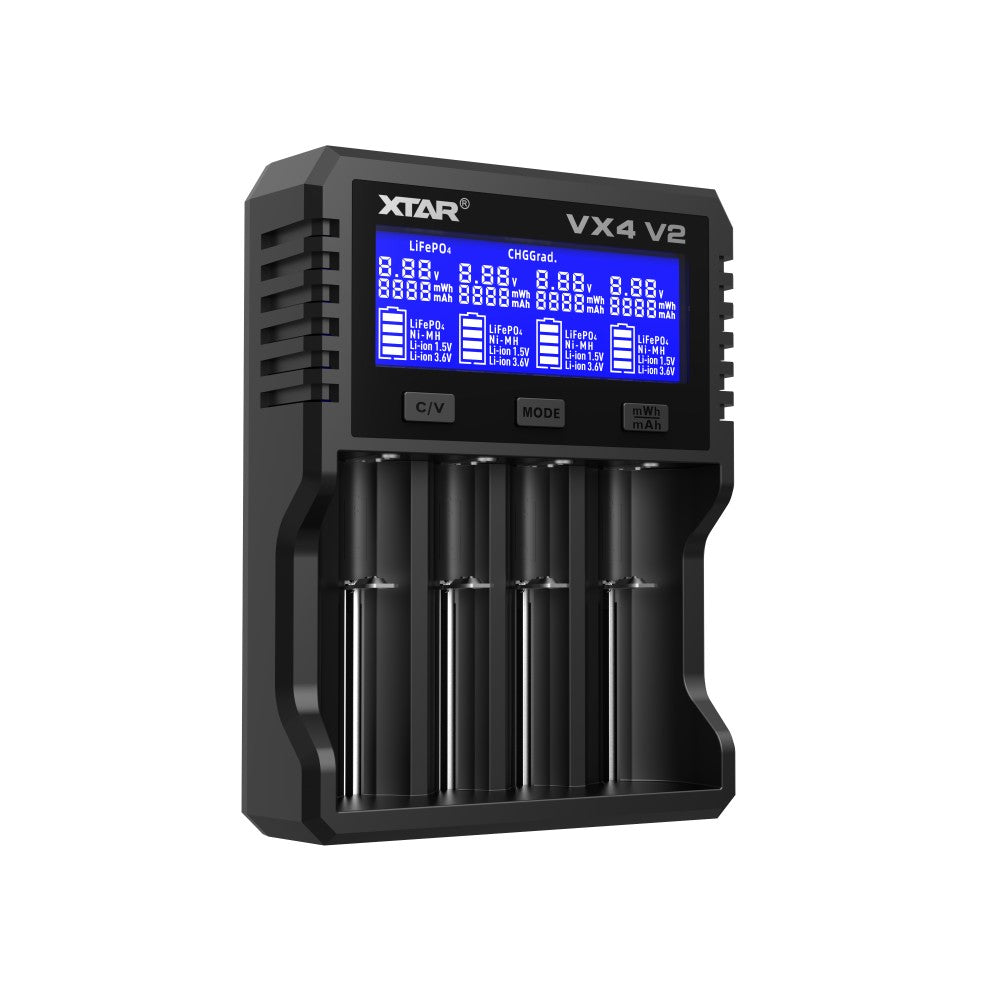
XTAR VX4 V2 Visible Mixer Ni-MH Batteries Charger
Couldn't load pickup availability
Share This:
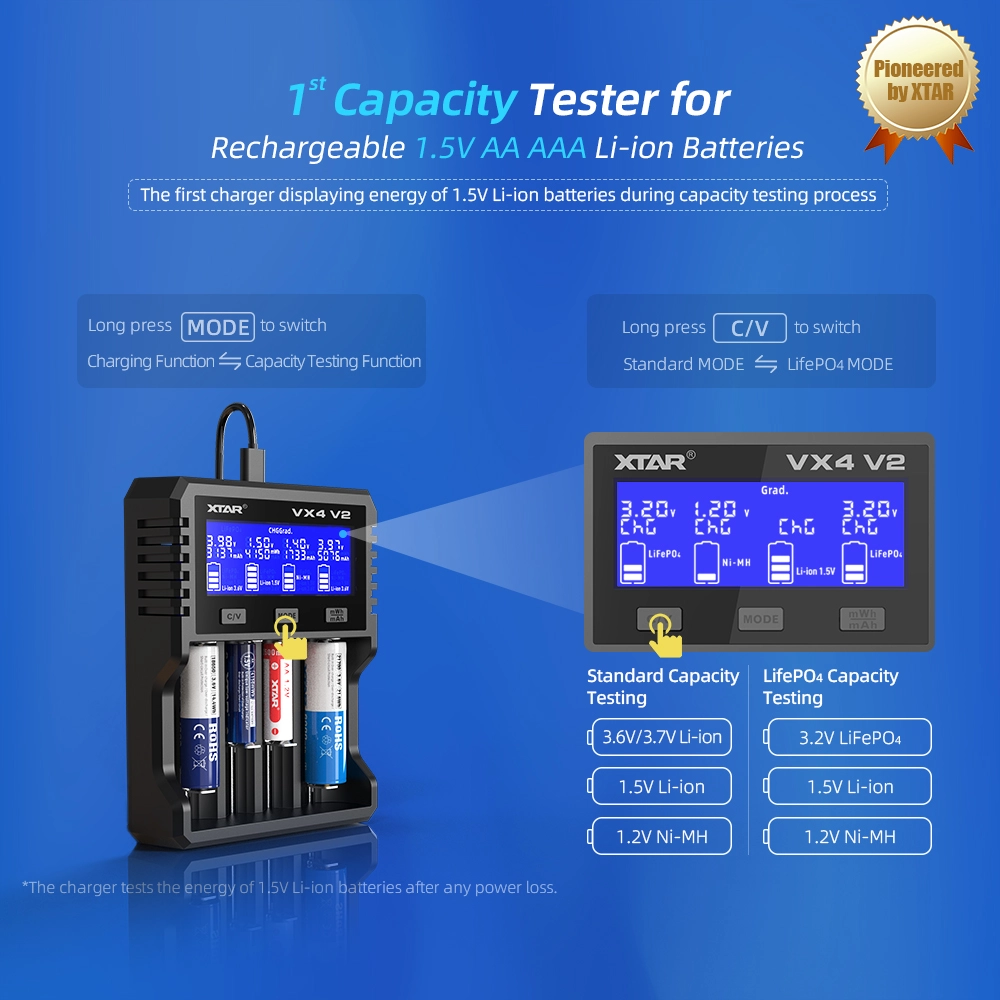
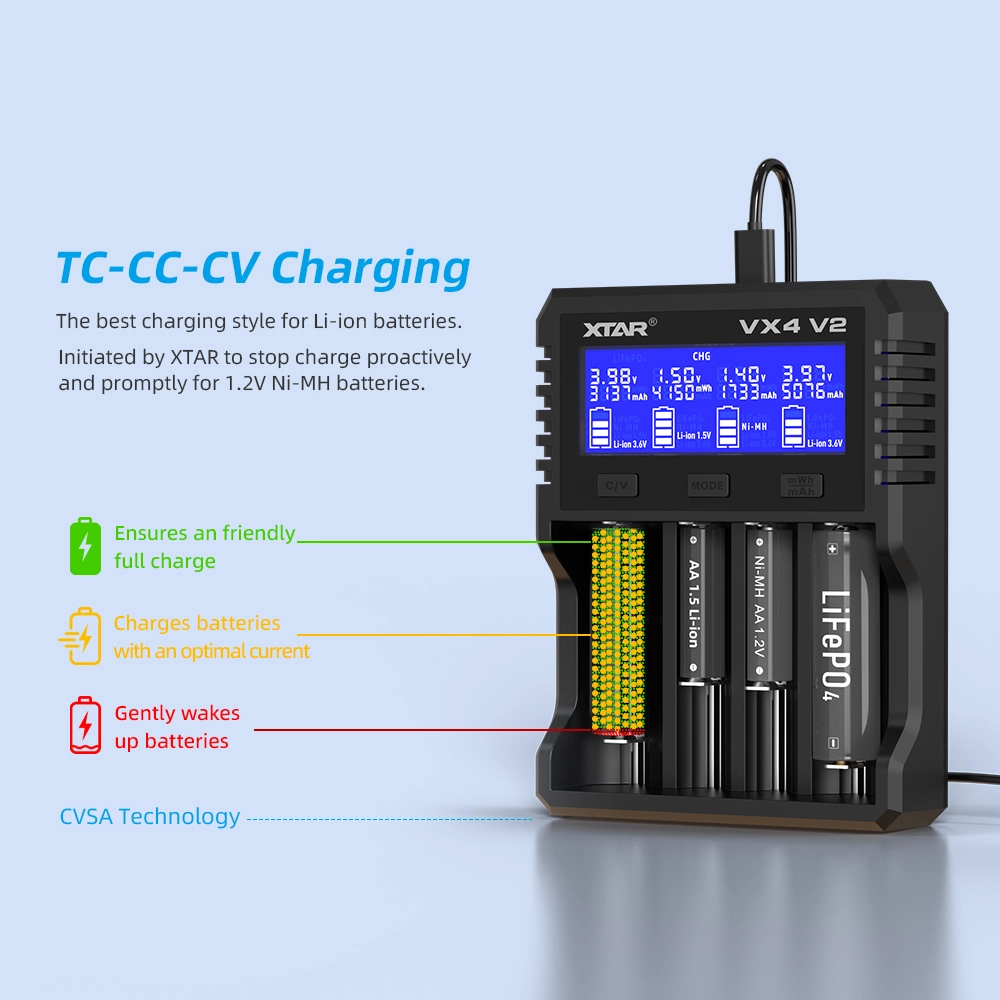
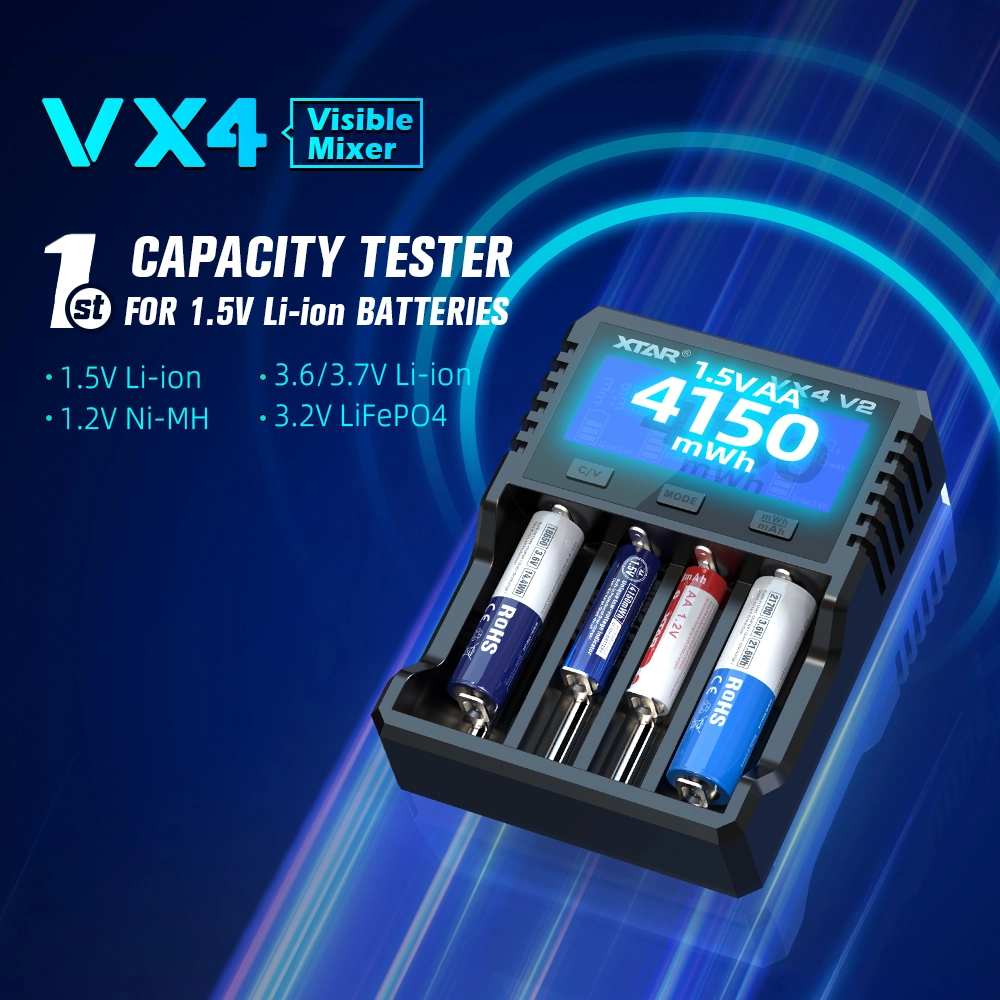
The First Capacity Tester for 1.5V Lithium Batteries.
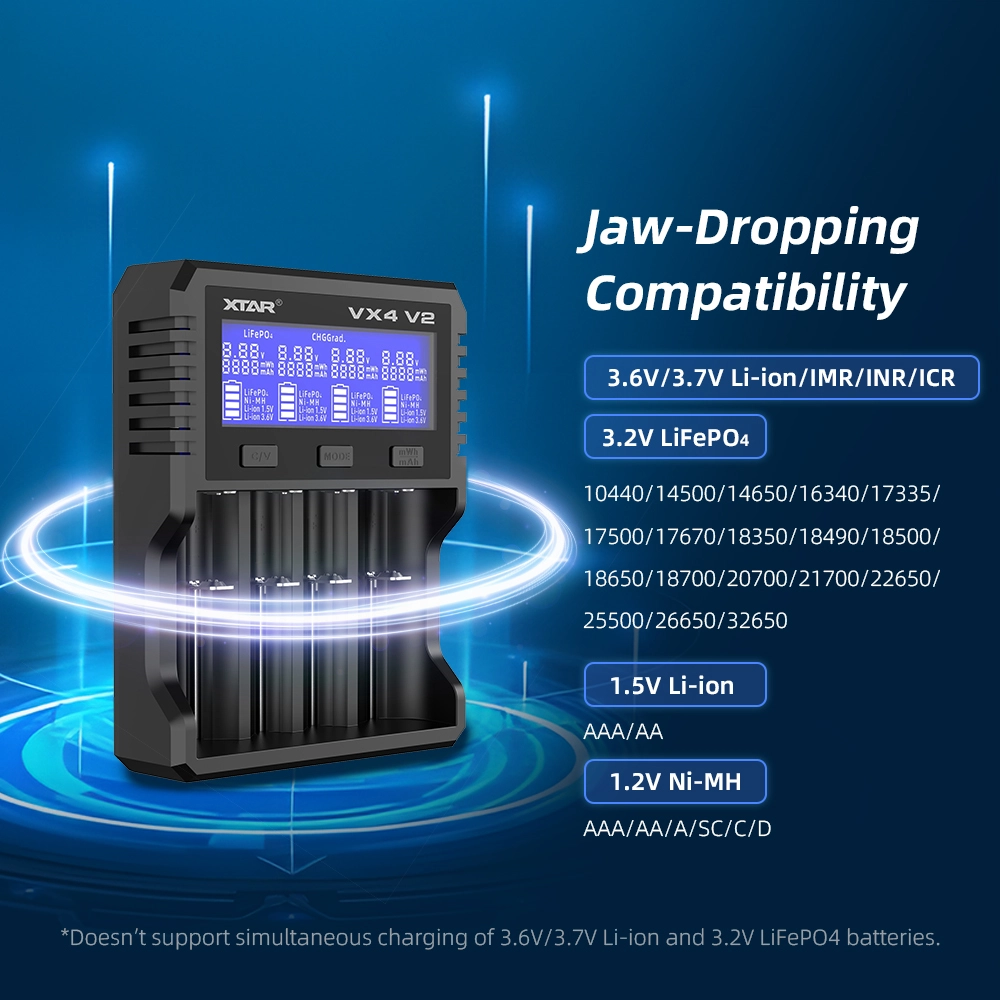
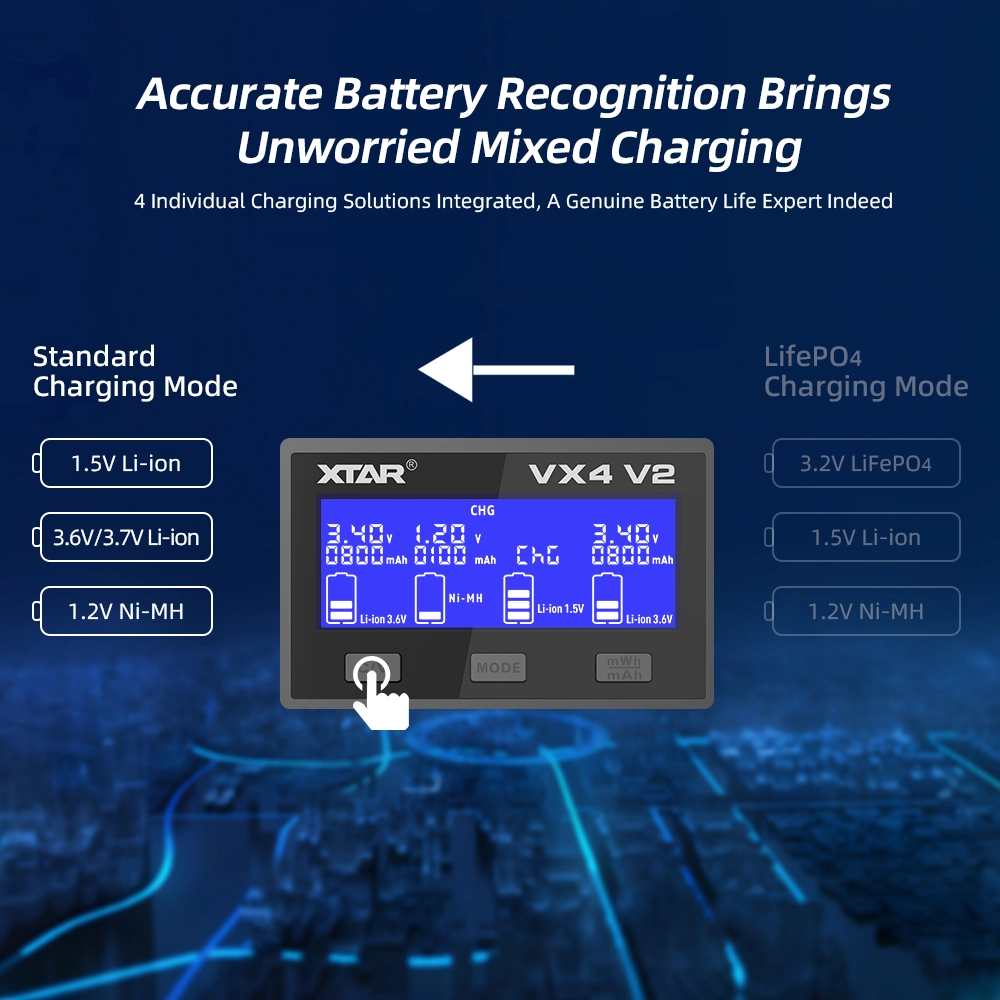
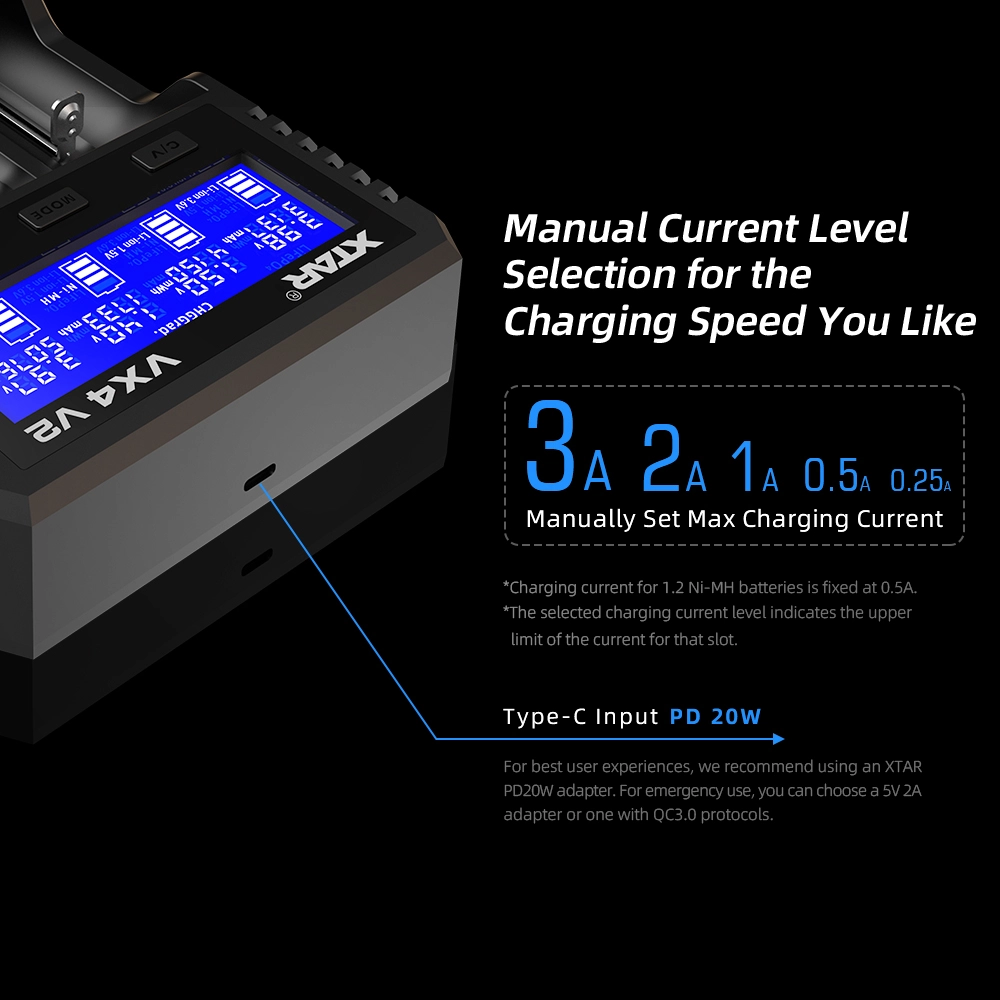
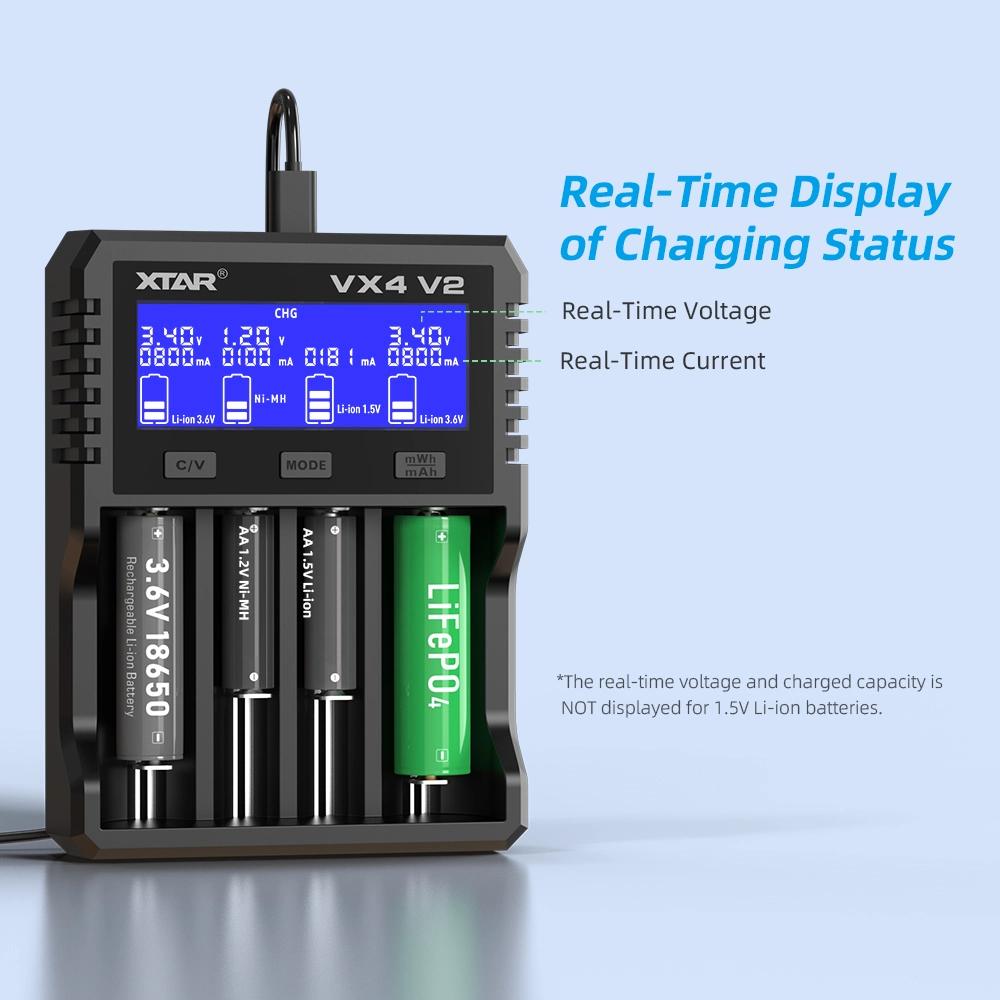
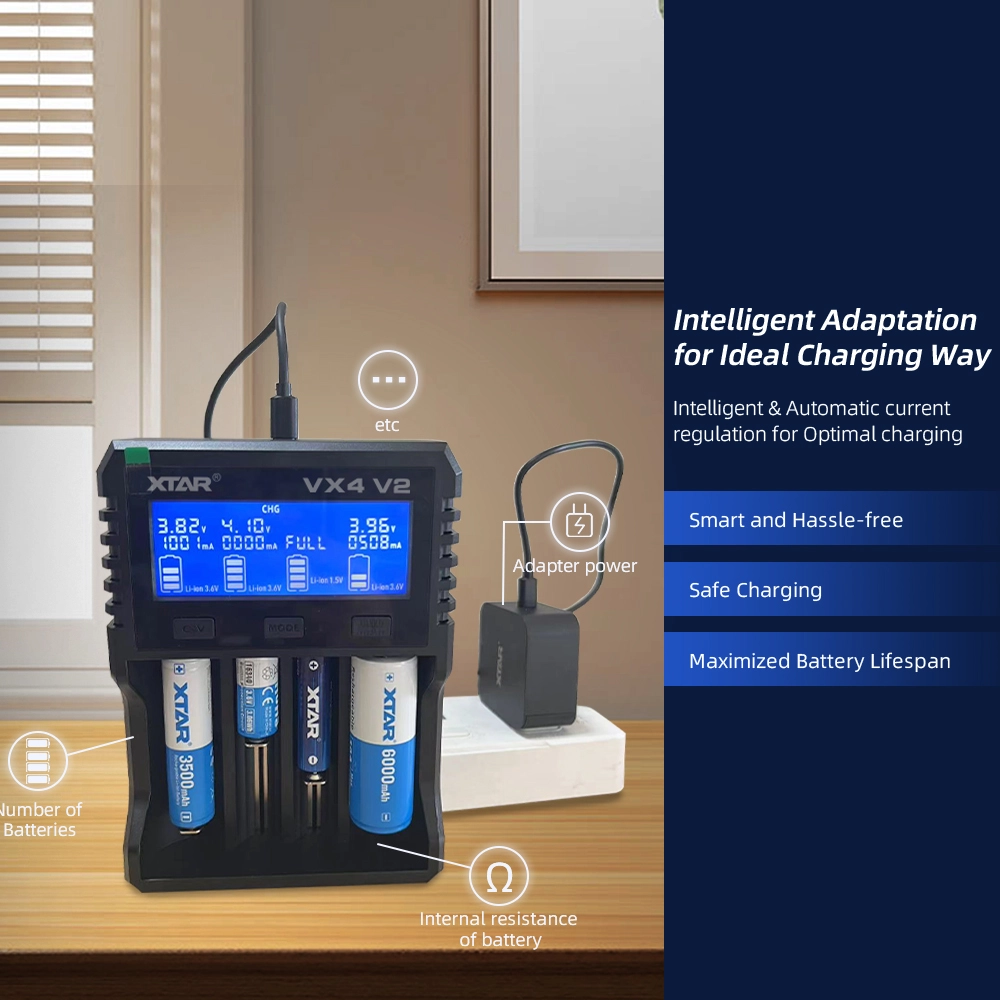
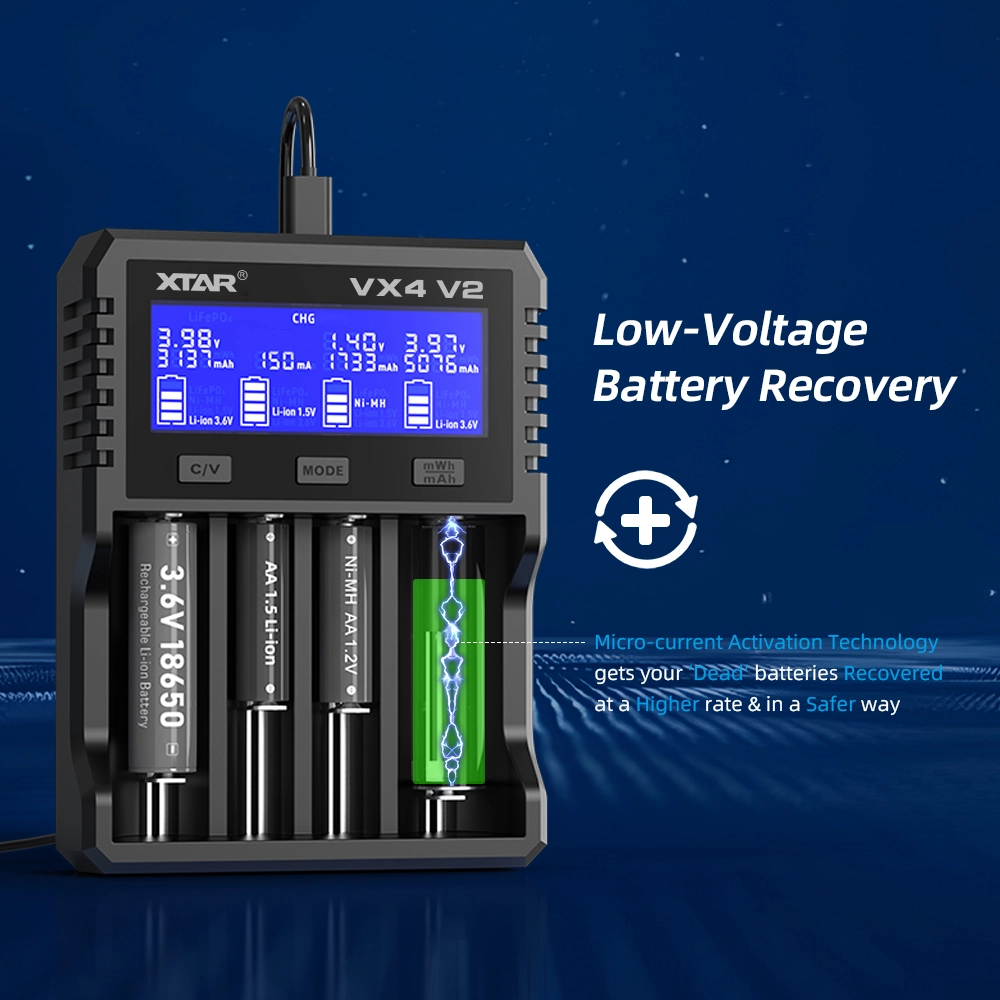
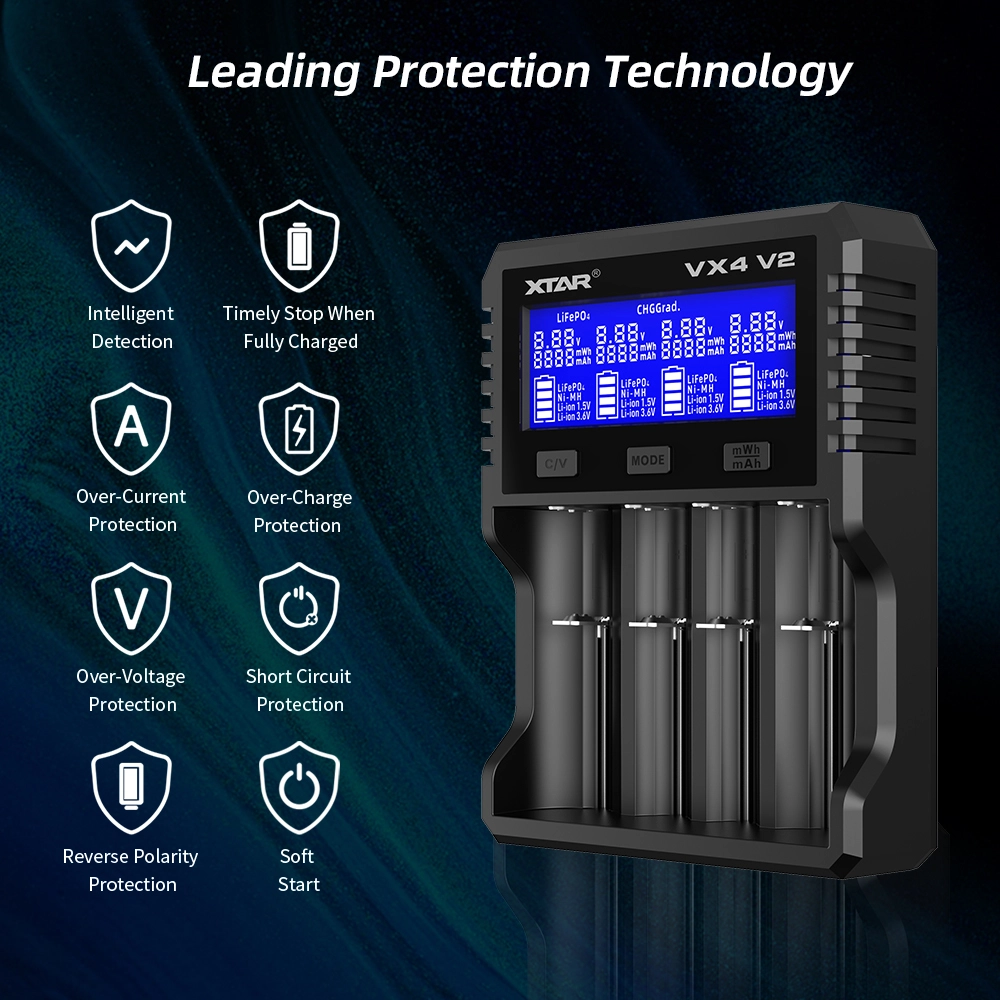
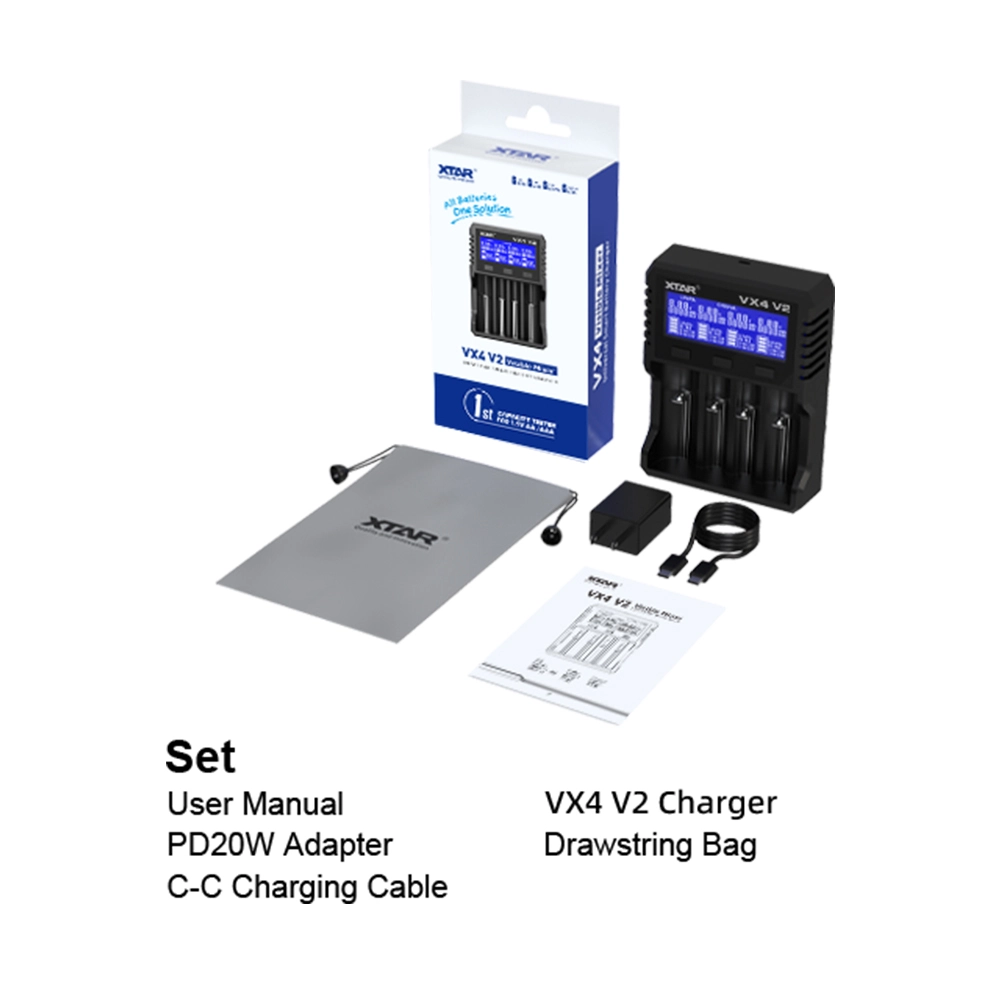
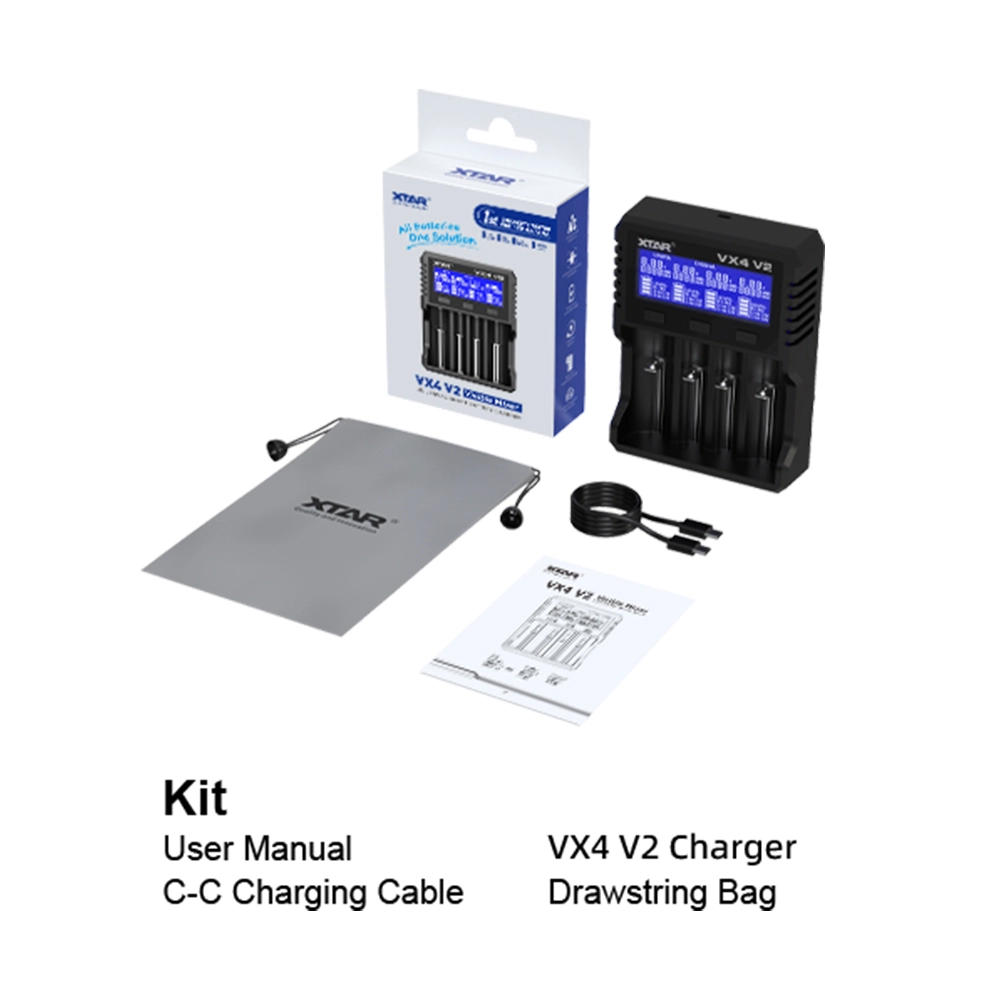
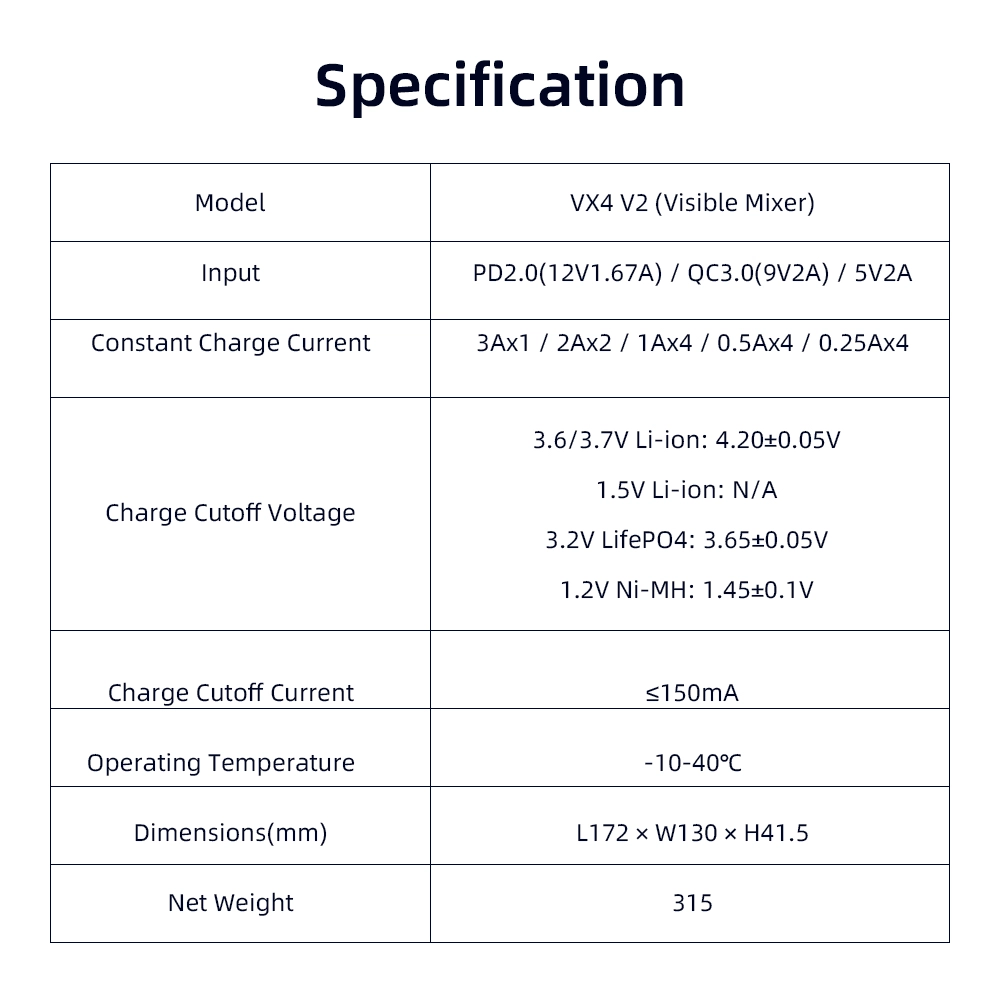
About XTAR VX4 Battery Charger
2. Why does VX4 design capacity grading function for 1.5V rechargeable Li-ion batteries?
3. For 3.6/3.7V Li-ion battery, would the set of 2.5V discharge cut-off voltage cause a over-discharging?
4. What effect does a battery with high internal resistance have on capacity testing?
5. When grading the XTAR 1.5V AA 4150mWh battery, why is the capacity value lower than claimed rating?
The advantage of using the 3.6V cell’s energy as the battery nominal energy is it helps avoid significant fluctuations in energy output due to conversion efficiency. First, the conversion efficiency of constant voltage step-down circuits will improve with industry advancements. Second, there are significant differences in conversion efficiency among different step-down circuits. For example, the conversion efficiencies of the constant voltage step-down circuit is 90%, while that of the linear step-down circuit is only 80%.
SHIPPING
The final shipping cost and estimated delivery timeframe will be available to you during checkout. Currently, we offer 3 International shipping methods which are steady and easy to track. Priority worldwide shipping, Premium ( Partial countries) and a faster Express shipping. The estimated times stated below are not guaranteed. An international package could experience delays like postal strikes or severe weather or Cov-19 situation. All shipping ways, PO Box address is not acceptable.
For some flashlights, there's a pure battery inside(phone charging),If We can not ship your packages via USPS or DHL,we'll ship your package in another way.
Note:
When you place an order for just the batteries, for easy shipping, faster and safe delivery, the batteries are placed in the flashlights.
If you don’t receive your order within the estimated time frame provided below and suspect that it might be lost in transit, please contact Flashlightgo Support ( support@flashlightgo.com ) and we can look into the order with the courier. Lost-in-transit requests must be submitted to Flashlightgo Support within 3 months of the date of shipping or before the courier archives the tracking information.
Option 1.
Express by DHL/UPS/Fedex/Aramax/SF etc ( there may be tax need to pay in this way),
The estimated time of delivery is usually 3-7 work days depending on the country. Includes detailed tracking and confirmation of delivery.
Option 2.
Premium ( 6-10days, All tax and Duty Paid),
All tax and duty are prepaid to carrier by Flashlightgo before shipping, so you dont need to pay any tax or duty when you get it.
Option 3.
Priority shipping(1-2 Weeks, average 10 days)
If we marked it is with all tax and duty paid, all tax and duty are prepaid to carrier by Flashlightgo before shipping, so you dont need to pay any tax or duty when you get it.
Learn more,Please click on Here.
To ensure that you get the desirable product, we allow a seven-day product return period. Any product return application outside this period will not be entertained.
All returned product must be unused and the original package should be kept.
Return:
We do not offer return for personal products like socks and hats or food, magazine and fragile or dangerous products The original receipt must be available for application of return.
Discount products:
No product return for discount products
Gifts products:
If the item is marked as a gift when purchased and shipped directly to you, it cannot be exchanged , refunded or warranty.
Exchange:
We only replace items if they are defective or damaged.
Exchange service are offered only to wrong deliveries or product damage not caused by client. If needed, please email to info@flashlightgo.com.
Warranty
How long is the warranty period?
Flashlightgo warrants to the original purchaser that the Product(s) shall be free of any defect in material or workmanship for a period of one year for labor and one year for parts from the date of the original order except the items listed below:
Chargers,Batteries and Other Accessories: 3 months warranty
Should the Product(s) supplied by Flashlightgo prove defective because of improper workmanship or material as reasonably determined by us, Flashlightgo agrees, at its option, to either repair or replace the Product free of charge, excluding any shipping or handling charges.
Learn more,Please click here.